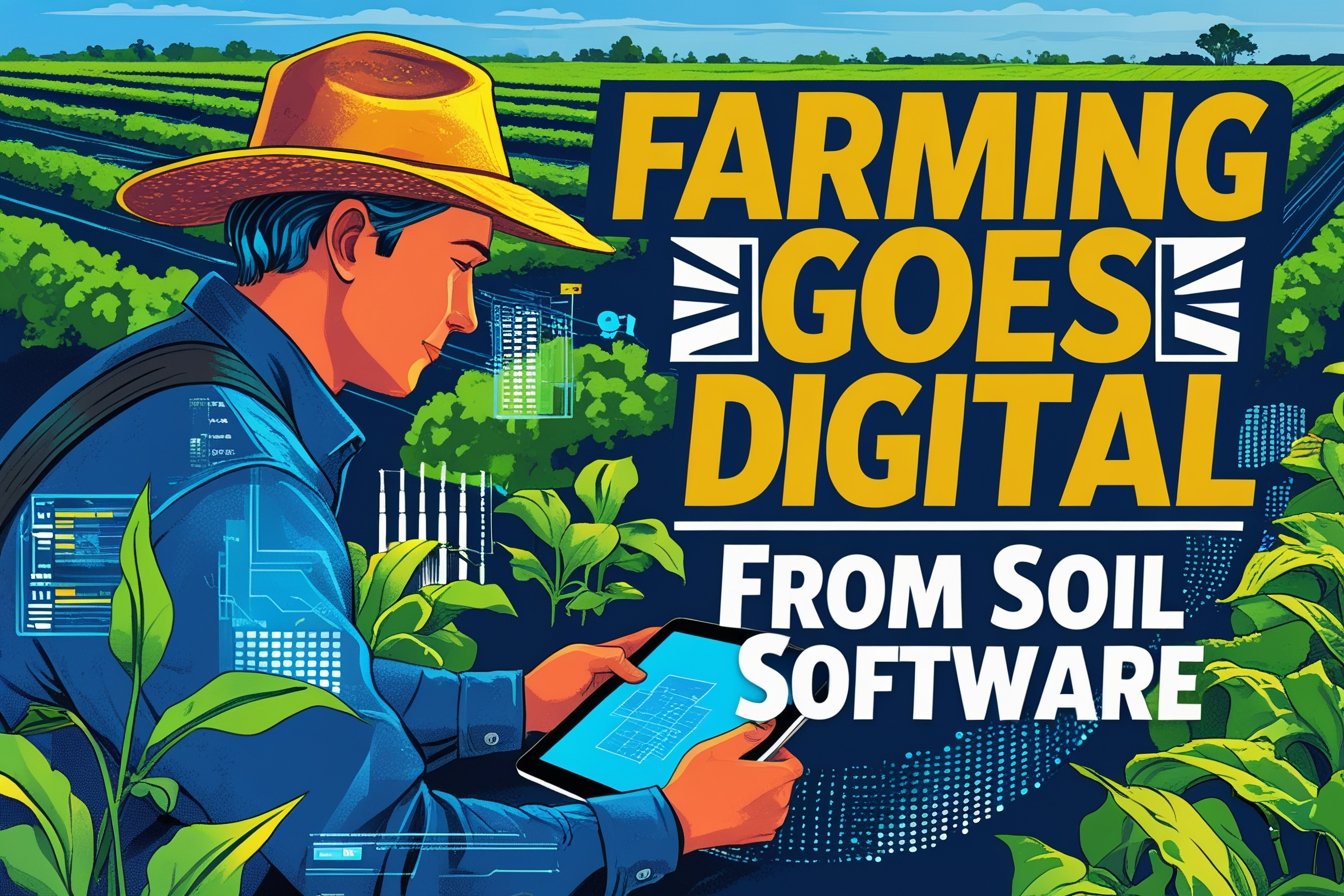
Imagine walking through a cornfield where every plant whispers its secrets to a farmer’s smartphone. This isn’t science fiction, it’s the reality of modern digital farming transforming agriculture from ancient traditions to cutting-edge technology. Today’s farmers are trading their old notebooks for sophisticated software systems, revolutionizing how food reaches our tables through smart agricultural solutions.
The Digital Revolution Reshaping Agricultural Landscapes:
The agricultural sector is experiencing its most dramatic transformation since the invention of the plow. Digital farming technologies are transforming traditional farming methods into data-driven operations, where every decision is informed by precise information. This shift represents more than just adopting new tools, it’s about fundamentally changing how farmers interact with their land.
Precision agriculture has evolved from a concept into a necessity. Modern farms now operate like high-tech laboratories where soil composition, weather patterns, and crop health are monitored continuously. The integration of Internet of Things (IoT) devices in farming has created an interconnected ecosystem where sensors communicate real-time data about field conditions.
The transformation extends beyond individual farms to entire supply chains. Agricultural software platforms now connect farmers with suppliers, buyers, and agricultural experts, creating a comprehensive network that optimizes every aspect of food production. This digital infrastructure has become the backbone of modern agriculture, supporting everything from seed selection to harvest timing.
The Digital Eyes of Modern Farms:
Agricultural sensors have become the nervous system of digital farms, providing continuous monitoring capabilities that were impossible just a decade ago. These devices measure everything from soil moisture levels to plant stress indicators, creating a comprehensive picture of farm conditions.
Soil sensors represent one of the most significant breakthroughs in precision farming. These devices can:
- Measure nutrient levels in real-time
- Track pH balance changes throughout the growing seasons
- Monitor soil temperature variations
- Detect pest activity before visible damage occurs
- Calculate optimal irrigation timing based on moisture content
Drone technology has added another dimension to farm monitoring. Agricultural drones equipped with multispectral cameras can identify crop diseases, assess plant health, and map field variations with incredible accuracy. This aerial perspective provides farmers with insights that ground-level observation cannot match.
Weather monitoring stations have evolved from simple thermometers to sophisticated prediction systems. Modern weather sensors integrate with satellite data to provide hyperlocal forecasts, helping farmers make crucial decisions about planting, harvesting, and crop protection.
Turning Numbers into Actionable Farm Insights:
Farm data analytics has transformed raw information into powerful decision-making tools. Modern farmers collect thousands of data points daily, from soil conditions to equipment performance, creating vast databases that reveal patterns invisible to human observation.
Machine learning algorithms analyze historical farm data to predict optimal planting times, identify potential pest outbreaks, and recommend fertilizer applications. This predictive agriculture approach helps farmers stay ahead of problems rather than simply reacting to them.
Yield mapping technology creates detailed records of crop production across different field areas. This information helps farmers understand which sections of their land perform best and why, leading to more targeted management strategies.
Data visualization tools convert complex agricultural datasets into easy-to-understand charts and maps. Farmers can now see their fields’ performance history, compare different management practices, and identify trends that guide future decisions. This visual approach to farm management software makes sophisticated analytics accessible to farmers regardless of their technical background.
When Machines Take the Wheel:
Agricultural automation has reached a tipping point where machines can perform many farming tasks with greater precision than human operators. Self-driving tractors equipped with GPS guidance systems can plant seeds with millimeter accuracy, ensuring optimal spacing and depth for maximum yield.
Robotic farming systems are handling increasingly complex tasks. Automated milking systems in dairy farms operate 24/7, while robotic harvesters can pick delicate fruits without damage. These machines work continuously, increasing productivity while reducing labor costs.
Smart irrigation systems represent another breakthrough in automated farming. These systems use soil moisture data, weather forecasts, and crop growth models to deliver exactly the right amount of water at the optimal time. This precision reduces water waste while ensuring crops receive adequate hydration.
Variable-rate technology enables farmers to apply varying amounts of seeds, fertilizers, and pesticides across their fields, tailored to the specific needs of each area. This targeted approach maximizes resource efficiency while minimizing environmental impact.
The Digital Command Centers:
Farm management platforms have evolved into comprehensive digital ecosystems that coordinate all aspects of agricultural operations. These systems integrate data from multiple sources, sensors, weather stations, equipment, and market information to provide farmers with complete operational visibility.
Modern agricultural apps put powerful tools directly into farmers’ hands. Mobile applications can identify plant diseases through photo analysis, calculate fertilizer requirements based on soil tests, and provide real-time market prices for crops. This mobile accessibility ensures farmers can make informed decisions regardless of their location.
Cloud-based farming platforms enable collaboration between farmers, agronomists, and agricultural consultants. These systems store vast amounts of farm data securely while providing access to specialized expertise when needed. Cloud agriculture solutions also facilitate data sharing between farming operations, contributing to industry-wide learning and improvement.
Economic Impact:
The financial benefits of digital agriculture extend far beyond initial technology investments. Farmers implementing comprehensive digital solutions typically see significant returns through increased yields, reduced input costs, and improved operational efficiency.
Precision farming reduces waste by applying inputs only where needed. This targeted approach can decrease fertilizer usage by 15-20% while maintaining or increasing crop yields. Similarly, precise pesticide application reduces chemical costs while improving crop protection.
Labor cost reduction represents another major economic benefit. Automated systems can perform many labor-intensive tasks more efficiently than human workers, addressing labor shortages while reducing operational costs. Smart farming technologies also enable farmers to manage larger operations with fewer employees.
Risk management through digital farming solutions provides economic protection against weather-related losses and market volatility. Predictive analytics help farmers make better timing decisions for planting and harvesting, while market integration platforms provide real-time pricing information for optimal selling decisions.
Environmental Stewardship Through Digital Innovation:
Sustainable farming practices are being enhanced through digital technologies that minimize environmental impact while maintaining productivity. Precision application of fertilizers and pesticides reduces chemical runoff into water systems, protecting local ecosystems.
Smart water management systems optimize irrigation to reduce water consumption while ensuring adequate crop hydration. These systems can reduce agricultural water usage by up to 30% through precise timing and application rates based on real-time soil and weather conditions.
Digital soil management prevents over-cultivation and erosion by providing detailed information about soil health and structure. Farmers can adjust their practices to maintain soil integrity while maximizing productivity, ensuring long-term land sustainability.
Carbon footprint reduction is another environmental benefit of digital agriculture. Optimized equipment routes reduce fuel consumption, while precision application of inputs minimizes greenhouse gas emissions from agricultural operations.
Challenges and Obstacles in Digital Adoption:
Despite the benefits, digital farming adoption faces several significant challenges. High initial costs for technology implementation can be prohibitive for smaller farming operations. The complexity of integrating multiple systems also creates technical barriers for farmers without extensive technology experience.
Internet connectivity remains a major limitation in rural areas where many farms operate. Reliable high-speed internet is essential for cloud-based farm management systems and real-time data transmission from field sensors.
Data security concerns also impact adoption rates. Farmers worry about protecting sensitive operational information while sharing data with technology providers and agricultural service companies. Establishing trust in agricultural technology platforms requires robust security measures and transparent data handling practices.
Training and education represent ongoing challenges as technology continues evolving rapidly. Farmers need continuous learning opportunities to maximize the benefits of their digital investments and stay current with emerging technologies.
What’s Next for Digital Agriculture:
Artificial intelligence in farming is poised to create even more sophisticated agricultural systems. AI-powered platforms will provide increasingly accurate predictions and recommendations, enabling farmers to optimize their operations with unprecedented precision.
Autonomous farming vehicles will become more capable and affordable, handling complex tasks like selective harvesting and precision planting. These systems will work alongside human operators, amplifying human capabilities rather than replacing them entirely.
Blockchain technology in agriculture will improve supply chain transparency and food safety tracking. Consumers will be able to trace their food from farm to table, while farmers will have better access to premium markets that value transparency and sustainability.
Satellite agriculture will provide more detailed and frequent monitoring of crop conditions globally. This technology will enable large-scale agricultural monitoring and support global food security initiatives through improved crop yield predictions.
Implementation Strategies for Successful Digital Transformation:
Successful digital farming implementation requires careful planning and phased adoption. Farmers should start with basic technologies like soil sensors and simple data collection systems before advancing to more complex automation solutions.
Agricultural technology integration works best when farmers partner with experienced technology providers and agricultural consultants. These partnerships provide technical support, training, and ongoing system optimization to maximize return on investment.
Financial planning for digital agriculture should include both initial equipment costs and ongoing subscription fees for software platforms and data services. Many farmers find success through equipment leasing programs that spread costs over time while providing access to the latest technology.
Conclusion:
The journey from soil to software represents agriculture’s most significant evolution in centuries. Digital farming is no longer a luxury but a necessity for competitive, sustainable agricultural operations. As technology continues advancing, farmers who embrace these digital tools will be better positioned to feed a growing global population while protecting our planet’s resources for future generations.
FAQs:
Q1: What is digital farming, and how does it work?
Digital farming uses technology like sensors, software, and data analytics to optimize agricultural operations through precise monitoring and automated decision-making.
Q2: How much does it cost to implement digital farming technologies?
Initial costs range from $10,000-$100,000+, depending on farm size and technology complexity, with ongoing subscription fees for software platforms.
Q3: Can small farms benefit from digital agriculture solutions?
Yes, many digital farming tools are scalable and offer affordable entry-level options specifically designed for smaller agricultural operations.
Q4: What are the main challenges in adopting digital farming?
Primary challenges include high initial costs, internet connectivity issues, technical complexity, and the need for ongoing training and support.
Q5: How does digital farming impact environmental sustainability?
Digital farming reduces chemical usage, optimizes water consumption, minimizes soil erosion, and decreases carbon emissions through precision application and efficient operations.
Q6: What skills do farmers need to succeed with digital agriculture?
Farmers need basic computer literacy, data interpretation skills, and a willingness to continuously learn new technologies, though many platforms are designed for user-friendly operation.