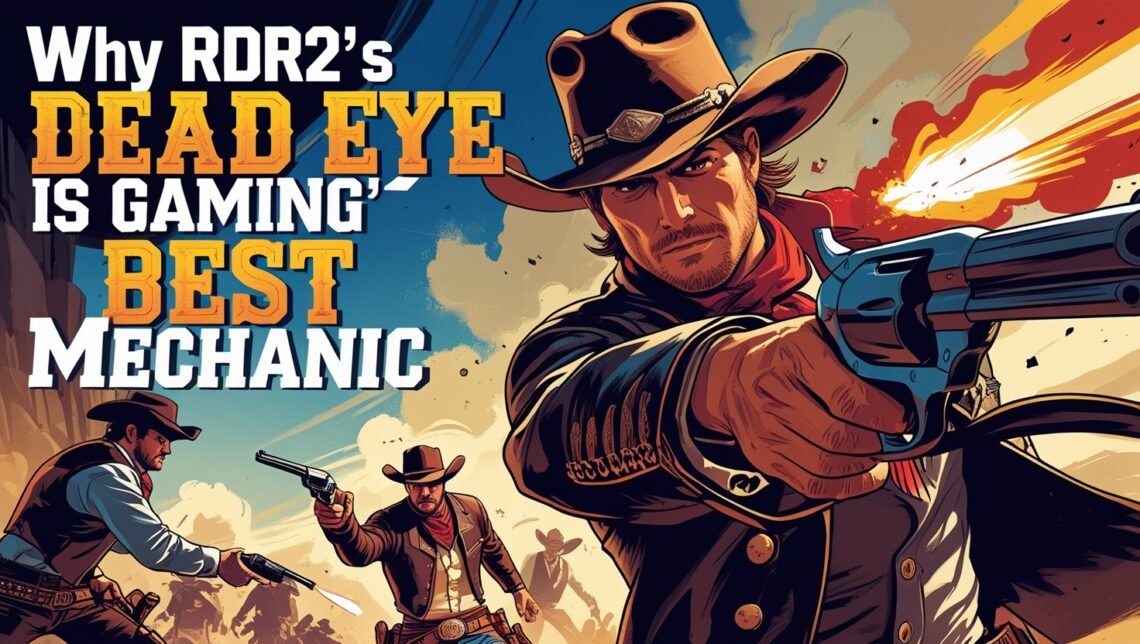
Ever wished you could bend time to land that perfect shot? In Red Dead Redemption 2, the Dead Eye system hands you that power, slowing the world around you so every bullet finds its mark. This isn’t just a flashy trick, it’s a seamless fusion of game mechanics and storytelling that turns every gunfight into a cinematic showdown.
When Time Slows and Legends Are Forged:
At its core, Dead Eye taps into our desire for superhuman precision without breaking immersion. As you draw your revolver, pressing the Dead Eye button dissolves reality into soft focus. The dusty street, the rattling spurs, even the fur on a fleeing bison blur together, leaving only your target in crystal clarity. It’s more than slow-motion, it’s a feeling of transformation, where you become the legendary gunslinger you’ve always dreamed of.
Marking Prey: The Evolution of Aim:
The genius of RDR2’s Dead Eye lies in how it lets you highlight multiple targets before letting fly. Each level unlocks new targeting finesse:
- Basic Markers: Outline enemies automatically for quick headshots.
- Manual Placement: Pinpoint heart or limb shots for maximum damage.
- Persistent Mode: Remain in slow-mo after firing, streamlining crowd control.
- Critical Highlights: See enemies’ vital organs glow, guiding your bullet’s path.
This layered design ensures that whether you’re a trigger newbie or a sharpshooter veteran, Dead Eye grows with your skill.
Gradual Mastery: From Rookie Draw to Sharp Shooter:
Unlike one-off power-ups, Dead Eye evolves organically over the course of Arthur Morgan’s journey. Early chapters gift you a few precious seconds of slow-mo; later, tonics and challenges stretch that window into nearly cinematic eternity. Alongside upgrades hidden in story missions, you earn Dead Eye improvements by:
- Landing precise kills
- Hunting legendary animals
- Crafting tonics and trinkets
This sense of progression turns each ranch skirmish or train robbery into an opportunity to refine your outlaw artistry.
Cinematic Flair Meets Player Agency:
Dead Eye isn’t just eye candy, it’s player empowerment. Rockstar designed it as a narrative tool: when Arthur’s guilt or adrenaline spikes, the screen’s edges darken, evoking tunnel vision. Yet you decide when to pull the trigger, how to frame the shot, and in what order to erase foes. That feedback loop, story spark influencing gameplay, and vice versa, makes every duel feel both personal and epic.
Accessible Yet Deep: Balancing Skill and Story:
One of Dead Eye’s greatest triumphs is its cross-genre appeal. It’s welcoming to newcomers while offering nuance for veterans:
- Instant Gratification: Slow time, tag targets, shoot, no twitch skills required.
- Strategic Layer: Choose which threats to neutralize first, and plan your bullet economy.
- Narrative Resonance: Upgrade tiers are unlocked by pivotal story missions.
- Tonal Variations: Use vampyrism-style Dead Eye in stealth or focus-heavy mode in shootouts.
This dual nature cements Dead Eye as a blueprint for mechanics that serve both gameplay and plot.
From AI Fodder to Real Threats: Strategic Depth:
Before Dead Eye, many shooters treated enemies like target dummies. In RDR2, foes react dynamically, seeking cover, returning fire, or panicking as your bullet markers hover above them. You learn to time your activation: catch a charging Bronc Buster mid-revolt, or neutralize a sniper perched on a rooftop. This interplay between AI design and player ability elevates every encounter from rote to riveting.
Emotional Feedback: From Heart-Pounding to Chill Vibes:
Nothing beats the rush of lining up a five-mark volley on a posse of outlaws, then unleashing a symphony of gunfire in one fluid motion. Dead Eye delivers instant emotional payoff:
- Anticipation: The world slows, music swells.
- Control: Your cursor glides over heads and torsos.
- Release: Bullets fly, enemies drop, adrenaline peaks.
Moments later, as time snaps back, you bask in the cinematic aftermath, smoke trails drifting, hats tumbling, and Arthur’s steady breathing. That roller-coaster rush keeps players coming back.
Cross-Genre Impact: Inspiring Modern Game Design:
Since RDR2’s debut, Dead Eye’s DNA has surfaced in action titles worldwide. Developers mimic its slow-mo target-locking in everything from sci-fi shooters to superhero epics. Yet few match Rockstar’s blend of seamless integration, narrative weight, and mechanical depth. Dead Eye stands as proof that a single, well-crafted ability can ripple across genres, shaping how we expect interactive storytelling to unfold.
Conclusion:
RDR2’s Dead Eye transcends simple bullet-time. It’s a living, evolving mechanic woven into Arthur Morgan’s saga, rewarding skill, underscoring story beats, and delivering cinematic thrills on demand. By balancing accessibility with depth, strategic nuance with emotional impact, Dead Eye cements its place as gaming’s most influential and unforgettable mechanic.
FAQs:
1. What makes Dead Eye unique in RDR2?
It blends slow-motion aiming with layered upgrades tied to story progression.
2. How many Dead Eye levels are there?
Five tiers unlock throughout the main campaign.
3. Can you upgrade Dead Eye outside the story?
Yes, tonics and challenges boost duration and focus.
4. Does Dead Eye work in multiplayer?
No, it’s exclusive to Red Dead Redemption 2’s single-player mode.
5. How do I activate Dead Eye on the console?
Press the right analog stick while aiming.
6. Will using Dead Eye make the game too easy?
Skilled AI and limited meter ensure you still need strategy.